


Phosphate Fertilizers
Products
-
 NP 20:20+13s (Sulphoammophos), Agropolychim Bulgaria
 -
NP 20:20+22.5SO₃ (Sulphoammophos), Hellagrolip SA Greece
-
NP 15:25 +12S(Sulphoammophos), Agropolychim Bulgaria
-
MAP 11:52 (Monoammonium Phosphate) , Agropolychim Bulgaria
-
DAP NP 18:46 (diammonium phosphate), Lifosa Lithuania
-
NP 18:38+5s+0,3Zn, Agropolychim Bulgaria
-
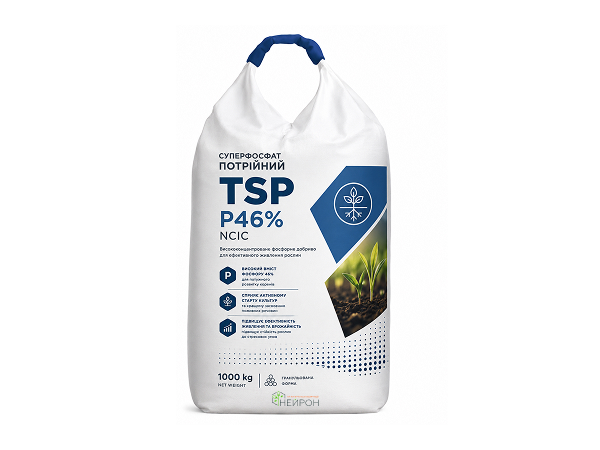
Triple Superphosphate TSP P46%, NCIC Egypt


Balanced nutrition is essential to ensure high yields and stable plant development, with phosphorus fertilizers playing one of the key roles. Phosphorus is an indispensable element that affects energy metabolism, root system formation, flowering, and fruit development. Insufficient phosphorus in the soil leads to slower plant growth, reduced yields, and lower product quality.
Neuron offers a wide selection of phosphorus fertilizers that meet modern agronomic requirements, guarantee quality and effectiveness, and allow nutrition to be adapted to different crop types and soil conditions. You can contact Neuron to buy phosphorus fertilizers at competitive prices and receive professional advice on selection and application.
What are the advantages of phosphorus fertilizers from Neuron
Neuron offers various types of phosphorus fertilizers, each with its own advantages:
- Natural phosphorus fertilizers — contain phosphorus in a slow-available form, which provides long-term nutrition, improves soil structure, and increases its biological activity. Using such fertilizers helps avoid rapid leaching of elements and maintains the natural balance in the soil.
- Organic phosphorus fertilizers — provide not only phosphorus but also a complex of nutrients that increase soil fertility and promote the development of beneficial microflora. They are environmentally safe and improve long-term agronomic performance.
- Mineral fertilizers — fast-acting phosphorus concentrates that provide prompt plant nutrition. The most popular are superphosphate, diammonium phosphate, and ammonium phosphate, which are actively used for starter feeding and during the growing season.
- We offer potassium–phosphorus fertilizers — complex supplements that combine two important macronutrients, supporting fruit and seed formation, increasing frost resistance, and improving stress tolerance.
Neuron guarantees quality and certified product origin. The high content of available phosphorus, as well as the optimal physicochemical form, ensure maximum application efficiency.
Application of phosphorus fertilizers for different crops
The application of phosphorus fertilizers for different crops is a key aspect of effective farming that directly affects yield and product quality. Phosphorus is one of the basic macronutrients necessary for full plant development at all growth stages, but it is especially critical for the root system, flowering, fruiting, and ripening processes. Here is a detailed breakdown of phosphorus fertilizer use for the main crop groups.
Phosphorus fertilizers for seedlings
For seedlings, phosphorus is of primary importance. During this period, a strong root system is formed, which is the foundation of further plant development. Applying phosphorus fertilizers in easily absorbable mineral forms promotes:
- Rapid development of the root system, ensuring better access to water and nutrients.
- Strengthening of stems and leaves, increasing overall stress resistance.
- Improved seed germination and the viability of young plants.
It is especially important to use phosphorus fertilizers for seedlings of crops such as tomatoes, cucumbers, strawberries, carrots, beets, and garlic, which require intensive nutrition to produce high-quality yields.
Phosphorus fertilizers for grain crops
For grain crops — wheat, barley, oats — phosphorus ensures the development of a strong root system, which is decisive for:
- Efficient absorption of moisture and nutrients from the soil.
- Increased tolerance to drought and other stress factors.
- Formation of large ears with fully developed grain.
- Higher yields and improved grain quality indicators.
Proper application of phosphorus fertilizers for grain crops is especially important for winter wheat and barley, as it contributes to successful overwintering and active spring growth.
Phosphorus fertilizers for oilseed crops
For oilseed crops — sunflower, rapeseed — phosphorus plays a critical role in forming seed mass and oil content. Timely and correct application of phosphorus fertilizers:
- Ensures intensive flowering and pod/seed set.
- Increases oil content in seeds, which directly affects the quality and value of the harvest.
- Boosts the overall yield of the crop.
- Raises plant resistance to diseases and adverse weather conditions.
It is especially relevant to apply phosphorus fertilizers to rapeseed at early development stages and during the formation of reproductive organs.
Phosphorus fertilizers for vegetable crops
Vegetables — tomatoes, cucumbers, carrots, beets, garlic — are particularly demanding in terms of phosphorus, as this element affects fruit quality, taste, and shelf life. Applying phosphorus fertilizers:
- Increases the content of dry matter and beneficial substances in fruits.
- Improves root system development, ensuring better water and nutrient regimes.
- Enhances plant resistance to diseases and pests.
- Promotes uniform ripening and improves the marketable appearance of vegetable produce.
Phosphorus fertilizers are used at all stages of vegetable growth, taking into account crop specifics and agronomic requirements.
Phosphorus fertilizers for lawns
For lawns, phosphorus fertilizers ensure density and a rich green color of the grass cover. They contribute to:
- The development of a strong root system, increasing lawn resistance to trampling and drought.
- Improving the overall health of the turf layer.
- Maintaining an optimal nutrient balance, which affects the longevity and decorative quality of the lawn.
Applying phosphorus fertilizers for lawns is an essential part of maintenance, especially when establishing new lawns or renovating old ones.
Features of applying phosphorus fertilizers
- It is recommended to apply phosphorus fertilizers directly into the root zone, often using localized placement in rows or holes.
- Phosphorus moves poorly in the soil, so it is important to consider fertilizer placement relative to the roots.
- It is recommended to combine phosphorus fertilizers with other types, especially nitrogen, for comprehensive nutrition.
- Timely and correct application ensures maximum effectiveness and return on investment.
Neuron provides professional recommendations and a wide selection of phosphorus fertilizers, allowing you to choose the optimal product and application scheme for each crop and agronomic condition.
Environmental friendliness and safety of phosphorus fertilizers
Neuron adheres to the principles of environmental safety and quality. Natural and organic phosphorus fertilizers maintain soil health, do not harm the environment, contribute to biodiversity conservation, and increase fertility. Mineral fertilizers are applied according to standards, minimizing the risks of phosphorus accumulation in the soil and contamination of water resources.
The use of Neuron’s phosphorus fertilizers meets the requirements of sustainable agriculture.
Advantages of cooperation with Neuron
- A wide product range that meets the needs of different crops and soil types.
- Quality assurance — certified fertilizers that comply with international standards.
- Competitive pricing for phosphorus fertilizers thanks to optimized production and logistics.
- Flexible supply conditions — from . kg to large wholesale batches.
- Professional consultation — experts will help you choose the best fertilizer and application scheme.
- Reliable logistics and timely delivery ensure stability and planning of agricultural operations.
Neuron is a reliable partner for Ukrainian farmers, helping to increase the efficiency of farming.
How to choose the right phosphorus fertilizer
The correct choice of phosphorus fertilizer depends on several factors:
- Soil type — acidity, texture, and organic matter content.
- Crop — its phosphorus needs, growth stages, and agronomic specifics.
- Fertilizer form — for a quick start, it is better to use mineral fertilizers with a soluble form of phosphorus.
- For long-term soil improvement and biological activity — natural or organic forms.
- The need for comprehensive nutrition — choose potassium–phosphorus fertilizers.
- Application rates — strict adherence to dosage and timing recommendations.
Neuron experts will help you select the optimal formula and application schedule to achieve maximum results.
Phosphorus fertilizers are divided into mineral (superphosphate, diammonium phosphate, ammonium phosphate), natural (phosphorites, apatites), organic (compost, manure), and complex potassium–phosphorus fertilizers.
Phosphorus promotes root system formation, increases photosynthesis intensity, improves flower and fruit development, and enhances plant resistance to diseases and stress.
Optimally — during the main fertilization before sowing, as well as during active growth for supplementary feeding.
Natural fertilizers act slowly, provide long-term nutrition, and improve soil structure. Mineral ones are fast-acting, provide an immediate effect, but may leach under excessive rainfall.
Yes, they support healthy root system development and improve seedling adaptation after transplanting.
They increase soil biological activity, improve its structure, and promote gradual nutrient release.
Compatibility is generally high, but it is important to follow recommendations and application standards to avoid chemical reactions and reduced effectiveness.
Neuron is a partner that provides high-quality phosphorus fertilizers in line with all agronomic requirements. Contact us for consultations and orders to provide your plants with the necessary nutrition and ensure stable, high-quality yields.


